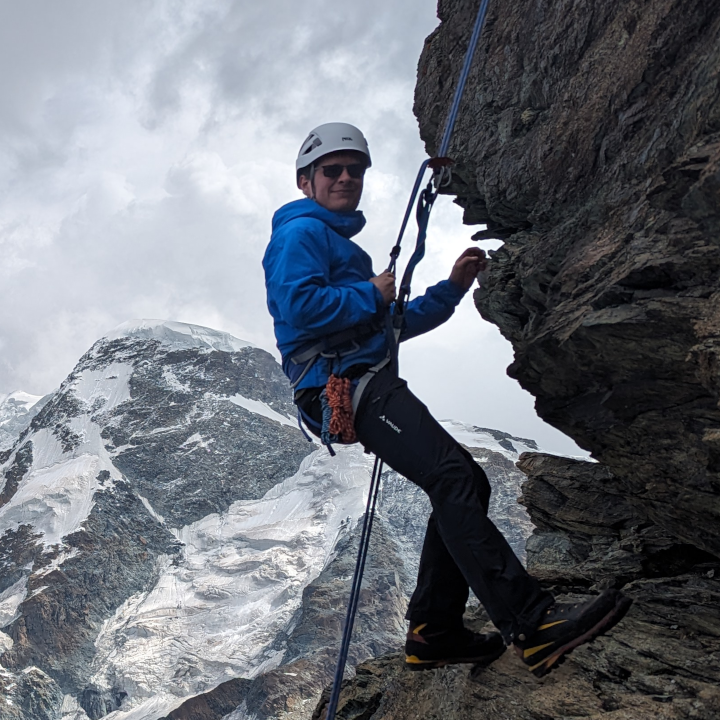
Philipp Becker
I am a Postdoctoral Research Scientist at Meta (FAIR) in Paris. I completed my PhD (Dr.-Ing.) at the Karlsruhe Institute of Technology (KIT) in 2025, supervised by Prof. Gerhard Neumann.
My research focuses on the intersection of Reinforcement Learning, Generative Modeling, and Representation Learning. I regularly contribute to the ML community through publications at venues such as ICLR, ICML, NeurIPS, RLC, and CoRL.
During my PhD, I was a Research Intern at the Samsung AI Center in Cambridge, working on text-to-image generative AI. I also worked at the FZI Research Center for Information Technology, where I was involved in the setup of a new research group and participated in grant writing and industry projects.
Before my doctoral studies, I worked with the Bosch Center for Artificial Intelligence in Tübingen. I hold a Master’s degree in Autonomous Systems (Computer Science) and a Bachelor's degree in Computer Science from the Technical University of Darmstadt.
Research
My research focuses on developing mathematically grounded algorithms for embodied artificial intelligence and reinforcement learning. I am particularly interested in how agents can learn robust, distraction-resistant representations from complex, multimodal data. By leveraging unsupervised learning paradigms, latent-predictive world models, and contrastive methods, my goal is to bridge the gap between high-capacity representation learning and real-world robotic control. A core part of this vision involves exploring RL-first approaches to Vision-Language-Action (VLA) models, aiming to help agents generalize more effectively across diverse manipulation and navigation tasks.
Algorithmically, my work lies at the intersection of probabilistic modeling, reinforcement learning, and generative AI. In the domain of sequence modeling, I have explored ways to build scalable, uncertainty-aware state-space models—such as combining Kalman Networks with modern architectures like Mamba—to better handle high-dimensional, noisy time-series data. I also apply these principled optimization techniques to broader machine learning challenges. This includes developing differentiable trust-region projections to improve the stability and sample efficiency of LLM alignment (RLVF), as well as designing efficient attention mechanisms for diffusion transformers. Ultimately, my goal is to design algorithms that are theoretically sound, computationally efficient, and capable of scaling to complex, real-world systems.
Here is a list of all my publications.
Updates
- Jan 2026: Excited to announce that our paper TROLL: Trust Regions improve Reinforcement Learning for Large Language Models which I wrote in the last days of my PhD with Niklas Freymuth, got accepted as an Oral at the International Conference on Learning Representations (ICLR). See you all in Rio!
- October 2025: Big month: I have not only successfully finished my PhD at KIT but also moved to Paris to start my new position as a postdoctoral researcher at Meta, FAIR.
- June 2025: Excited to announce that the my internship work was accepted at the International Conference on Computer Vision (ICCV).
- April 2025: I am currently wrapping up my internship at the Samsung AI Center in Cambridge, and will visit ICLR 2025 in Singapore on the way back from the UK to Germany.
- Nov 2024: Started a research internship at the Samsung AI Center in Cambridge, where I’ll focus on efficient Text-to-Image generation by including recent structured state space approaches into diffusion models.
- May 2024: New paper at the first Reinforcement Learning Conference: Combining Reconstruction and Contrastive Methods for Multimodal Representations in RL . Looking forward to the conference at the University of Massachusetts, Amherst.